

Key Details:
- Born: 18/04/1936, Maastricht, Netherlands
- Joined: 1961
Achievements:
- 1958 – 1978 Men’s Hall of Fame Team
- 1980 Life Membership
Other Notes:
- The Peter Mies Rising Star Award was introduced in 2016 to recognise promising male and female players in the senior club.
- In September 2024, the new changerooms at Prospect Vale were completed and named the Peter Mies Pavilion.
HONOURS
Northern League
1961
State Championship
1961
Northern League
1962
Northern League
1963
State Championship
1963
Northern League
1965
Northern League
1966
Statewide Cup
1966
Northern League
1968
Northern League
1969
Northern League
1971
Northern League
1972
Northern League
1975
Northern League
1976
Statewide Cup
1976
Northern League
1961
State Championship
1961
Northern League
1962
Northern League
1963
State Championship
1963
Northern League
1965
Northern League
1966
Statewide Cup
1966
Northern League
1968
Northern League
1969
Northern League
1971
Northern League
1972
Northern League
1975
Northern League
1976
Statewide Cup
1976
FOOTBALL TASMANIA HALL OF FAME INDUCTEE & LIFE MEMBER
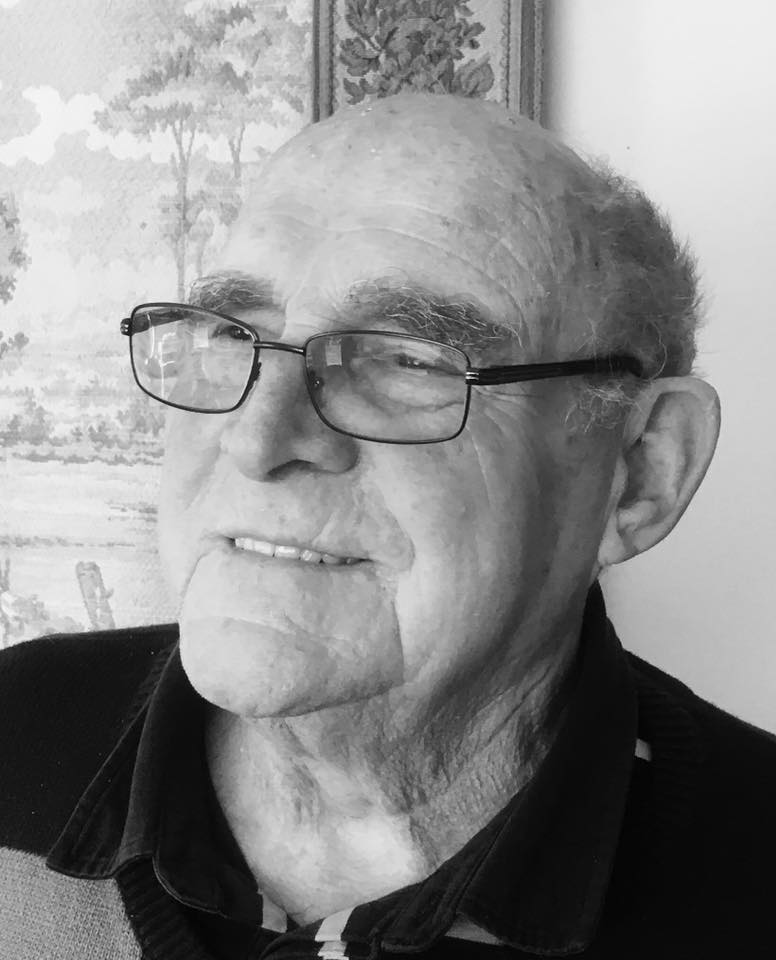
For more than six decades, Peter Mies was at the heart of football in Northern Tasmania. Arriving from post-war Europe in 1960, Peter joined Launceston Juventus (now Launceston City FC) as a talented player and captain-coach, before going on to serve as committee member, president, life member and, ultimately, club Patron.
Peter was a driving force behind establishing the club’s long-term home at Prospect in partnership with the Australian Italian Club. He personally negotiated with contractors, helped build the ground and facilities, and, together with his wife Christina, even put their family home up as collateral to secure the club’s future. Today, hundreds of players call that venue home, playing on the foundations he helped to lay.
On the field, Peter was a multiple-time State and Northern representative, State champion and nine-time Northern champion, and he coached at several Tasmanian clubs. Off the field, he was a pioneer in lifting the standard of the local game, recruiting overseas players, bringing visiting teams to Tasmania and mentoring generations of players and coaches. Many who went on to become influential figures in Tasmanian football credit Peter’s guidance as life-changing.
Peter’s story has been recognised in the Meander Valley Council documentary “The Peter Mies Story”, in Adam Muyt’s book Clog Ball, and through the naming of Launceston City’s new pavilion in his honour in 2024. Football was a family legacy: his wife Christina is also a life member, and his son Roger and grandson Noah and Ryan have proudly worn the Launceston City and Tasmanian colours.
Respected by rivals, loved by his club and admired across the state, Peter embodied what community football can be-hardworking, generous, multicultural and deeply connected to place. His impact on Launceston City FC and Tasmanian football will be felt for generations.
HUMANS OF LAUNCESTON
Facebook Page
Original post
August 2, 2017
“I was four when the last world war broke out. My memories from that time are very vivid. We lived like animals my family. To survive. My family would spend most nights down in the cellar to avoid the bombs. Come up during the day to see what we could find to eat. The bombs were mainly from the Allies, not the Germans. They were trying to destroy the mines and industrial areas as they had been occupied by the Nazis.
Some of their bombs missed their targets and a lot of fire bombs were dropped. It set fire to everything instantly. There were always houses burning.
When the Yanks came and liberated us, we had plenty of food from them.
Everything was in cans. Soup. Meat. Fruit. Then we got on ticketed rations after 6-8 months of the canned food. My eldest brother was in the army and he joined a group they called the Partisans. They blew up the railroads and petrol supply lines to Normandy and without them, the war would have continued for another 3 or 4 years. Their escapades crippled the German attacks. My brother Jan ended up in the Buckauld Concentration Camp for two months.
I was born in the Southern province of the Netherlands in a place named Maastricht, close to the German and Belgian border.
As kids, we had a ball. Wartime or not. We were kids. We would pinch the cigarettes from the soldier’s buckets and we discovered condoms for the first time. We kids thought they were balloons and wondered why the soldiers had all these balloons. At school, I blew one up and a teacher was very angry with me but I didn’t know why. We later found out what they were (Laughs). He slapped me across the head.
I had played soccer all my life. I was playing in the third division. There were no professional teams back then. About four games to go, my coach put me in the senior team and we went on and won the championship and advanced to the second division.
The President of the Nr. Baak Soccer Club then owned a confectionery business and was quite well off so sponsored our prize for winning the championship. Our trophy was a suit. Not your typical trophy but it was great as nobody really had a suit back then. We didn’t have money for such luxury items like suits. It came in quite handy.
When I was 14 I went to work in the Maurits Coal mine, also known as ‘The Pit’. It was one of the largest underground coal mines in the world. If you have not been there you could not imagine. It was huge. It was dark and grimy and the worst place to work. But if you worked in ‘The Pit’, you didn’t have to go in the army.
It was tradition that on the way home from work, you would stop and have a few beers. I was still working there when I was 18, earning good money, about 250 gulden a week, which was huge money back then. And I was working very hard and also going to Night School and studying how to become a house painter.
In the pub one night I met a man, whom I grew up with and he was now in the Dutch Marines. Air, land and sea they would take care of and it was hard to get into. They were the elite soldiers of the Dutch Armed forces. He convinced me that if I wanted to get out of the mine, I had to enlist. If you served in the army you got 75 cents a day and in the Marines , you earnt $1.50 a day. I was used to getting good money so I chose to become a Marine.
When I joined, it was the coldest winter in 100 years. When I was standing in line, I had my hands in my pockets like I did when I was working in ‘The Pit’. An officer with the gold gallens on his shoulders came up to me and screamed “Get your hands out of your pockets” But I was cold. And I had learnt in ‘The Pit’, not to take any shit from anyone. So, I kept my hands in my pocket. He said “You’re a Marine now”. But I had not quite signed the papers so I said “Not yet I’m not”. And kept my hands in my pockets. He was not too happy.
I had a very trendy haircut and had to get it shaved off. I was sad about that. A barber put his hand on top of my head and shaved around it. It was the worst haircut I had ever had.
I was a good fit for the Navy and excelled very quickly. I was offered to become a sniper, a parachutist and a frogman. These were badges you earned and your pay rose by 50 cents a day for every badge you got. So, I got them all. I was a crack shot sniper and a very skilled diver and parachutist by the end of my time in the navy.
So, I was then sent to South America to a place called Curaco. In my time in South America, I was promoted onto the cruiser boats in a senior position and we sailed into other parts of the world that were joined to the Netherlands by ocean or that had a Dutch embassy. I travelled the world and it was fantastic.
In late 1955, I visited Sydney, Perth and Melbourne. And I remember thinking how beautiful it was and how someday I would perhaps like to live there.
Upon finishing my tenure with the Marines, I had to decide whether or not to go back to ‘The Pit’, but luckily by then, my brother Jan was the boss at a huge painting business and said to me “Well, you have studied it now it’s time for you to do it” So I did. But I didn’t like it. It was not a very challenging job.
Then I met a man who said “Do you want to earn some big money”?
I said “What doing”?
He said “Just come with me”.
Holland was full of homes with the big brick stack chimneys and they would have big steel grates every few metres for you know, stability and strength, and it was his job to paint all the grates to make sure they stayed strong enough to hold the chimneys together. We would be 120 metres high off the ground sometimes. We would have small planks of wood we would place in the chimney, and move up and up to each grate. No ropes. Just hooks and planks. It was incredibly dangerous and one bad step and you were dead. I earnt 4 times the average painters wage as danger money.
I stayed in that job for eight months until one day, we were having a beer in the pub after work, and I couldn’t get my glass of beer to my mouth. And my boss noticed my hands were shaking uncontrollably. He said “That’s it for you Piet, you’ve finished. It usually takes four or five months but it’s arrived late for you”. You see, because of the heights, and just standing on a piece of wood, it was so dangerous. But up there you think you are free, but you are not. It destroys your nerves eventually.
So, I had to leave that job. Around this time, I went to a dance and I met Christine. I thought she was gorgeous. And such a kind person. We married on the 14th May in 1960. We have now been married for 58 years.
(See wedding photo in top of comments)
A Dutch mate of mine had moved to a place called Legana in Tasmania and he wrote to me to tell me how beautiful and peaceful it was. So, we booked our flights and we flew into Launceston two weeks after we married. I still joke that we are still on our honeymoon (laughs).
If you didn’t have a supporter/ sponsor back then, they sent you to the migrant centre at Bonegilla. So, he set me up with his sponsor who had helped him get to Tasmania. We weren’t allowed to bring more than 50 pounds into the country. Don’t ask me why. I had earned such good money on the chimneys but had to spend it before our departure. I bought my mother a washing machine and a few other things.
At Launceston Airport, we were picked up in a brand-new FJ Holden and we came to Riverside. We stayed at a house that had a spare room that was owned by an old lady. When it rained, we had to keep moving the mattress to keep dry. The roof leaked and it was far from ideal.
(See photo of us at Princes Square fountain 1958 in top of comments)
My mate took me to a local soccer match, and it was Launceston United vs Juventus. I was over 6 foot 2 and very fit looking and a man came up to me and asked “Do you play football”?
I said “Yes I do”.
He said “I’m from Launceston United and I’ll pop in this week and grab your details and you can come and play for us” I said sure. Then, straight after, I was approached by a man from Juventus and he said “Nope. I will sign you up right now. What’s your details?” And that is how I started my life at Juventus F.C here in Launceston. 56 years I have been there.
We won the 1961 championships, the ’63 championships, we have won about nine Northern League finals and have been an integral part of the local football scene for 50 years, I played for them until I was 44 years old. I had to retire. I was having aches in muscles I never knew I had (Laughs) I had had enough. I have been president, captain coach and been a committee member for over 40 years and I am very passionate about the club.
(See photo of Juventus first team -1961 in top of comments)
Our original oval was at 63 George Street and we outgrew it so it came time to move. By then I was on the committee at the Australian Italian Club and I said we have to move. There was a lot of land behind the Italian Club but no money to buy it. So, I went guarantor on a loan to buy the land, which the club paid back to me over the next next decade.
So, we decided to build our own ovals and training grounds up behind the Italian Club at Prospect. I went to the fellow Dutchman, Bill Pel who had his own Construction business and said to Bill what our plans were. He said to me “I can do that Peter. That’s $90 an hour plus fuel. I said “But Bill, we have no money”. He said that he won’t be able to help until he could get paid, which was fair enough.
But I pestered him and ring him and pestered him again. I said to him ‘Look Bill, we have to do this, we are applying to be in the State League and one of the conditions is, we must have our own home ground and training facility. We only have 8 weeks in which to do it. It really is very important”.
I knew it would be a game changer for the game here in Launceston. It was imperative that we moved right then and there. And I was right.
Bill Pel finally said to me “Ok Peter, if you pay for my fuel, and buy me a beer, I’ll come down and do it for you”. It cost me $40 a day for fuel and within four days, he had that whole playing field at the right level. He was a good man Bill Pel. I still had a lot of work to do though and I spent the next few weeks down there with a Massey Ferguson tractor, reinforcing the ground with a gate on, getting rid of rocks, sowing seeds, laying topsoil. Lots of people from the club were involved and it was really starting to come together.
We sowed the grass and 8 weeks later, we played Hobart team Caledonians on the oval and we have not looked back.
We got all the new Australians to come play for us. We could not buy any England players as we had no money.
So, we decided to start Bingo nights at the club. And they became huge. A real boomer. $700-$800 a week for the club. And we started to serve meals there, about 100 on a Thursday night. And we made some decent money and put it all into bringing some very talented footballers here to Launceston.
The first one was Ernie Guest, the second one was Peter Savill and the third one was named Sawdon. All up we brought out about a dozen English players to Tassie over the years. The local players would lift their game when playing with such talented men. It was amazing to see. The belief they would get from playing with players from another level was inspiring for me to witness.
I got a call one day and got told that the German Second division team Harcta Three wanted to have a friendly match down here in Tassie. So, I said “Yes definitely let’s make it happen”. So, they came. We had a crowd of 5,000 people. There were cars parked all the way down to St Pats College.
All of the wives and other women from the club, decided to give them a big welcome to Tasmania gift and got a pig with an apple in its mouth, sewed it up, stuffed with Italian bread and the local Italian butcher came down and sliced it up and served it. It was a spectacular feast and we had a huge party with them that lasted until the early hours. The German team sent us a letter later on and said it was the best time they had ever down here in Tassie out of all the friendly matches they had played around the world.
Our recruits were all very talented but Pete Savill was something special. He was signed to Leeds United from the age of 14 and was a truly gifted footballer. He could pass the ball 40 or 50 metres just exactly where you wanted it. Head, chest or feet, he could do it. He went on to win every medal and accolade there is in Tasmanian Football including two Rothmans Medals.
After two years his visa run out and he had to go back to the U.K. He was offered a contract with a club in England and I said to him “Well, Peter, if you decide to come back to Tasmania, I will train you to be a painter and you can work for me”. He thanked me and went back to England to play football.
He rang me four weeks later later and said “Hello. It’s Pete Savill here. Were you for real when you offered me a job?” I said “Yes I am a man of my word Peter”. He said “I’ll get back to you”. 3 days later he rang back and said he had booked his ticket.
He came back to Launceston and started to work for me, and he was a bit wary as he had never had a job before. He was 24 and been a professional footballer since he was plucked up by the legend Don Rees at Leeds United.
On his first day painting, I visited him and he had paint all the way down his arms to the elbows. I laughed my head off and asked “How you going Pete”? He just smiled and said “Alright mate”.
Well, you know what? Pete Savill went onto become my best worker, never had a sick day, never late. Always did the job asked of him. He did so well in fact that I sold my business to him when I retired and he went on to have a very successful career, thanks to his smarts and hardworking ethic. He still does it to this day. A truly wonderful man and such an asset to our island is Pete Savill. I cannot speak more highly of him. He is just like me. An immigrant who contributed to the community who took him in.
Sav got paid match game fees but he always put more back into the club than he ever earned from the club. He loaned the club $15,000 of his own money so we could get the clubhouse finished. That man deserves all the good things that can come to him in life.
At one stage, he left Juventus and I must be honest, I was very disappointed at the time. But now I can see where he was coming from. He wanted to be a player and a coach and his ambition was very healthy. Nothing wrong with that.
Sav never chased the money. He chased his dream and wanted to achieve something great here in Tasmania and he did just that. He had the one thing that you need to be successful in football. And that is vision. He can see what is happening all over the ground. It’s a gift.
We have two kids Roger and Olga. Roger played football all of his playing life for Juventus City and still lives here in Launceston and is an accountant. Roger’s sons, Ryan and Noah, now both play for Juventus. Olga played soccer and loved her horse riding and is now an Education Manager at a school in Hobart. Olga has two boys Sam and Zac who play soccer for University and her daughter Olivia also plays football.
So our five grandchildren, are all studying and playing sport and we are very proud of them. They challenge me with questions and I love it. My son and grandson are so much better footballers than I was. I was the tallest in the league.
Juventus in my opinion is the closest club in Tasmania. We are a very loyal and tight knit club and some of the most wonderful people are involved in the club and committee now. Our new president played in our first State league final and has some good ideas. I think we have a great future.
I have a green thumb and gardening is one of my passions. My orchids have won first prize at many gardening shows around the state. Christine and I have travelled a lot overseas and we have seen most of the world. We have had a wonderful life. At my age, I can say to you that nothing in life matters more than your kids and your grandchildren. As long as they are ok, you are ok. But I believe that in life, when you do something for yourself, and make a living for yourself, and go through hardships, you can make decisions. This ethic rubs off on others in your life. Christine and I have had a beautiful life together and our family are just wonderful.







Leave A Comment